

For decades, the global travel industry has chased the ideal of “seamlessness” a world where technology hides the gears of logistics and every connection is guaranteed. But today, that definition is no longer fit for purpose.
Between geopolitical shifts, climate-driven route changes, and the increasing frequency of global network outages, disruption has moved from being a rare headache to the primary operating environment. As the industry prepares to gather in Durban for Africa’s Travel Indaba this May, the conversation needs to move past simple recovery. The real question is: how do we build a travel ecosystem that doesn’t just break when the unexpected happens, but absorbs the shock?
From disruption to operating environment
Long positioned as one of the continent’s leading tourism trade platforms, bringing together international buyers, African exhibitors and media, Indaba has traditionally focused on showcasing destinations and driving tourism growth. Increasingly, however, it is also becoming a space for confronting a more complex reality: disruption in global travel is no longer the exception, but the norm.
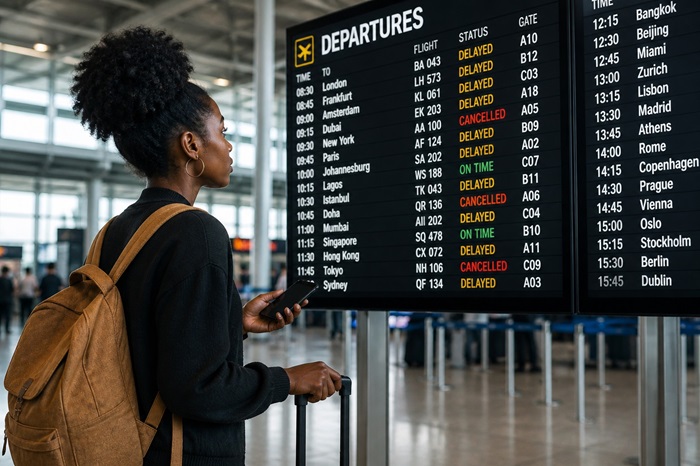
The recent rise in global network outages, affecting everything from airline dispatch to border control, highlights how deeply interconnected and increasingly fragile this ecosystem has become. These aren’t just technical glitches; they are real-world reminders that disruption is no longer a hypothetical risk, but a constant factor we have to navigate.
“Disruption used to be something you managed occasionally. Now it’s something you navigate around,” says Lisa Sebogodi, Founder and Managing Director of Batsumi Travel.
A quiet shift in traveller expectations
Alongside these systemic changes, traveller behaviour is evolving.
There is a growing preference for flexibility, whether in booking conditions, routing options or on-the-ground support. At the same time, travellers are placing greater value on clarity, communication and control, particularly when plans change unexpectedly.
As a result, the industry is moving away from purely transactional services toward more advisory‑driven support, where understanding risk and responding quickly are as important as securing a booking.
Implications for African travel
For African destinations, this shift presents both opportunity and pressure.
On one hand, global travellers are showing growing interest in destinations offering authenticity, cultural depth and less congestion, areas where many African markets are well positioned. On the other, turning that interest into sustained growth depends on the strength and coordination of travel systems, from air access and visa processes to service delivery.
Platforms like Indaba play a critical role here, not just in marketing destinations, but in fostering the partnerships needed to strengthen these systems across the continent.
Redefining seamless travel
The idea of “seamless travel” has long been associated with efficiency and ease. In the current environment, that definition has to shift.
Seamlessness is less about the absence of disruption, and more about how effectively it is managed. It’s about how quickly travellers are informed, how smoothly alternatives are arranged, and how supported they feel throughout the process.
This places a renewed emphasis on human judgement, local expertise and responsive service, even as technology continues to play an enabling role.
The move from transaction to advocacy
As conversations at Africa’s Travel Indaba unfold, the focus is likely to extend beyond recovery and growth, toward a more fundamental question: what does a resilient travel ecosystem look like in practice?
For industry players, the answer may lie less in predicting the next disruption, and more in building systems and relationships that can absorb and adapt to change.
Article Provided