
Nic Holden – Co-founder and MD at ACGL, operators of South Africa’s largest mall-based esports tournament
Traditional sport has visible referees, coaches and codes of conduct. A football match has a referee blowing a whistle. A rugby team has a captain answerable for their players’ conduct. These structures are easy to see, even for people who do not follow the sport closely.
Competitive gaming has its own version of this, but it is far less visible. Tournament administrators enforce rule books. Penalties exist for cheating, unsporting conduct and abuse of opponents. Players are held accountable in ways that mirror traditional sport. The difference is that almost none of this is understood outside the gaming community itself.
What sportsmanship looks like in gaming
Sportsmanship in gaming covers much of the same ground as it does in physical sport: how a player handles losing, how they treat an opponent after a defeat, and whether they follow the spirit of the rules and not only the letter of them.
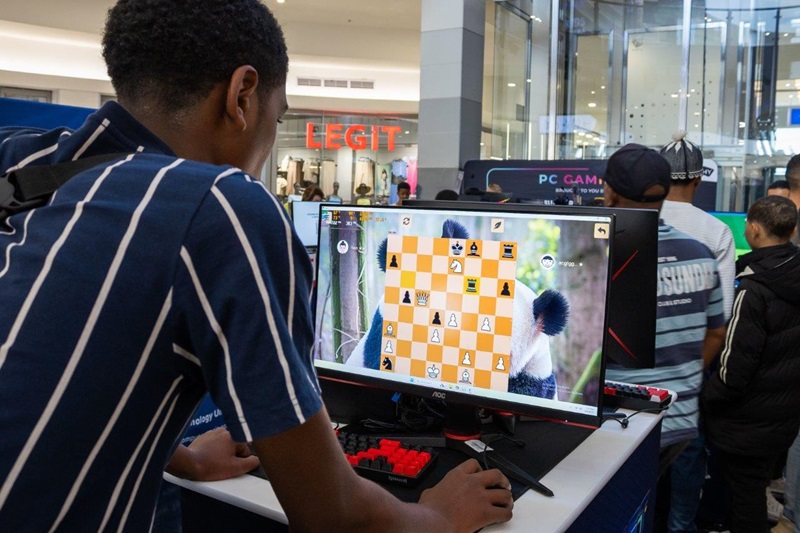
At our events, good sportsmanship often shows up in small but important moments. It can be a handshake or fist bump after a match, a simple “GG” between players, or the way someone handles a loss without blaming their opponent, the equipment or the admin team. We encourage players to respect the result, raise disputes through the correct process and remember that they are competing in a public environment where younger players, parents and spectators are often watching. In many ways, the esports equivalent of a handshake happens before and during a match as much as after it, in how a player carries themselves when a result goes against them.
Who enforces the rules?
Organised tournaments rely on administrators and referees to manage disputes, apply penalties and remove players who breach the code of conduct. This role is comparable to a referee or umpire, but it rarely receives the same recognition, partly because it is less visible to spectators and partly because gaming is still seen by many as unregulated.
A good example is what happens when a match dispute is raised during an event. The tournament team pauses the process, reviews the information available, speaks to the players involved and applies the rules as consistently as possible. This could relate to anything from incorrect match settings to a player leaving a match early, a disputed result or inappropriate conduct. The important part is that the decision does not come from the loudest person in the room. It is handled by the admin team, according to rules that were communicated to players before the tournament started.
Addressing cheating and harassment
Gaming culture has a reputation, not always unfair, for toxic behaviour between players, particularly online. Organised tournaments are one of the clearest counterpoints to this. Because matches happen in front of administrators, and often in public view, there is a level of accountability that anonymous online play does not have.
For ACGL, the escalation process depends on the nature of the incident, but the principle stays the same: investigate, verify and act. A minor first offence may result in a warning or a match penalty. Serious misconduct, cheating, harassment or repeated abuse can lead to disqualification and bans from future events. We also try to separate emotion from intent. Players can be disappointed after a loss, but that does not excuse abusive behaviour. Once someone enters an organised tournament, they are no longer just playing online with friends. They are part of a structured competition and are expected to behave accordingly.
Esports does not lack rules. People outside the community often just do not see them. Behind every organised tournament is an admin team applying a code of conduct, resolving disputes and making sure players understand that fair play matters just as much online as it does on a field or court.
Learning discipline through competition
For many players, particularly those competing for the first time, organised tournaments are also where they first encounter formal rules around conduct. Losing in front of a crowd, having a decision go against you, or being penalised for a mistake all require a level of composure that online, anonymous play does not demand.
We often see younger or first-time players arrive at events carrying the habits they picked up from casual online play. Over the course of a tournament or season, that changes. They learn to check in on time, listen to the briefing, accept an admin decision, manage their emotions after a loss and support teammates or opponents respectfully. That development is one of the most valuable parts of organised esports. Not every player will go on to compete professionally, but many leave with a better understanding of discipline, accountability and how to handle pressure.
A structure worth recognising
None of this means gaming has solved the problem of poor conduct, in the same way no traditional sport has fully solved it either. But organised competition gives gaming a structure through which discipline, accountability and respect can be taught and enforced. That structure deserves more visibility than it currently gets.
For more information about the MTN SHIFT Gaming Experience, brought to you by MTN and Hyprop, go to acgl.gg/mtnshift. All tournaments operated by ACGL.
Article Provided