
Printing today supports everything from signage and décor to packaging and manufacturing, each with its own material and production demands. Businesses often need to produce both small, customized orders and larger batches without slowing down operations. Traditional print methods can struggle to keep up when flexibility and speed are both required. This is where UV technology becomes practical, especially with a uv flatbed printer that can print directly onto rigid and flexible materials. By removing the need for multiple preparation steps, it helps meet the growing demand for short-run jobs and personalized output. The result is a more efficient workflow that makes it easier to handle diverse projects while keeping turnaround times manageable.
How UV Flatbed Printing Works
UV flatbed printing uses ultraviolet light to cure inks instantly as they are applied to a surface. Instead of waiting for inks to air dry or set, the curing happens immediately, reducing the risk of smudging and allowing prints to move straight into finishing or delivery stages. This method supports a wide range of substrates, including wood, glass, metal, acrylic, and plastic. Compared to solvent or screen printing, which often involve transfers or layering processes, UV flatbed printing applies ink directly to the material. This simplifies production and opens up new possibilities for printing on surfaces that would otherwise be difficult to handle using traditional techniques.
Key Advantages for Businesses
The benefits of UV flatbed printing are practical and measurable. One of the most significant advantages is faster turnaround time, made possible by instant curing. Jobs can be completed quickly without compromising quality. Reduced setup requirements and less material waste help control costs, particularly when switching between different designs or handling one-off orders. The technology also delivers high-resolution results with sharp detail and consistent color output. Whether producing a single item or a large batch, businesses can expect reliable results across every piece. This consistency supports on-demand production, allowing companies to produce items only when needed instead of maintaining excess inventory.
Common Applications Across Industries
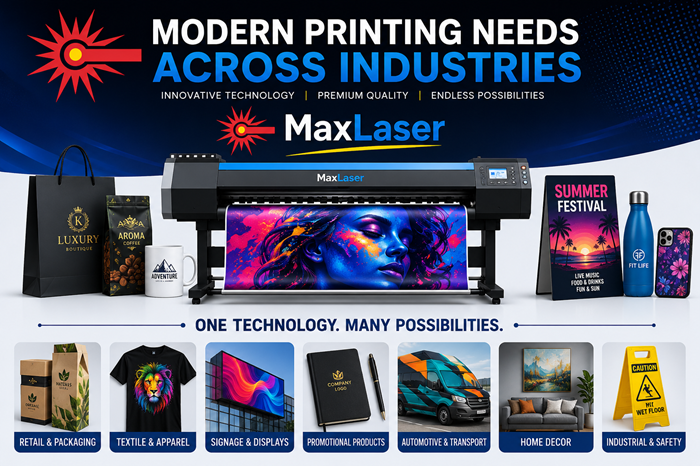
UV flatbed printing is widely used across multiple sectors because of its flexibility. In signage and display production, it produces durable graphics that hold up well under different conditions. For interior décor and furniture, it enables direct printing onto surfaces, allowing for custom designs and finishes that would otherwise require additional processes. Promotional and branded products benefit from quick turnaround and precise customization, making them ideal for marketing campaigns. Industrial uses include labeling and packaging prototypes, where accuracy and material compatibility are essential. The demand for personalized retail and e-commerce products has also expanded the role of UV printing, giving businesses the ability to offer unique, made-to-order items.
Factors to Consider Before Choosing a UV Flatbed Printer
Selecting the right UV flatbed printer requires careful evaluation of several factors. Print bed size determines the maximum dimensions of materials that can be handled and affects overall productivity. Material compatibility is also important, as not all machines perform equally well across different surfaces. Ink durability and adhesion quality should be assessed to ensure long-lasting prints. Businesses must also balance speed and quality, as higher output speeds may affect detail depending on the equipment. Ease of use and integration into existing workflows can influence day-to-day efficiency, while maintenance requirements and operating costs play a role in long-term planning.
Tips for Maximizing Print Quality and Efficiency
Getting the most out of a UV flatbed printer depends on consistent processes and attention to detail. Proper surface preparation ensures that inks adhere correctly and produce clean, accurate results. Color calibration and careful file setup help maintain consistency across projects. Routine maintenance keeps the equipment running smoothly and reduces the risk of downtime. Training operators is equally important, as skilled handling improves both speed and output quality. By making use of the design flexibility offered by UV printing, businesses can create distinctive products that stand out while maintaining efficient production workflows.
Conclusion
UV flatbed printing brings together versatility and efficiency in a way that supports modern production needs. Its ability to print directly on a wide range of materials, combined with fast turnaround times and consistent quality, makes it a practical option for many industries. For businesses looking to expand their offerings or improve operational efficiency, it provides a flexible solution that adapts to changing demands. Exploring its capabilities can help unlock new opportunities while keeping production streamlined and responsive.