

Digital wallets are no longer the future; they are firmly part of the now. Across South Africa’s townships and cities, more people are managing their money through mobile phones than ever before. What was once seen as a supplement to a bank account is now replacing it altogether for many. With no paperwork, low monthly fees, and no need to visit a branch, digital wallets are challenging the role banks have traditionally played in people’s financial lives.
While bank accounts have long been the foundation of financial life, especially for salary payments and savings, many modern consumers, particularly younger generations are embracing the speed, simplicity, and flexibility of digital wallets, sometimes foregoing traditional banks entirely.
This shift happening here at home and not only at a global scale. According to Discovery Bank and Visa, over 60% of South Africans now prefer digital wallets for everyday transactions, citing ease of use, real-time tracking, and enhanced security. Digital wallet usage grew 9% in 2023 alone, with adoption rising across urban centres and townships alike as fintech becomes woven into daily life.
“Digital wallets have become more than useful, they’re a financial lifeline for those excluded from traditional banking,” Jonathan Holden, COO at leading digital payments platform, SOLmate. “More South Africans are living fully in the digital economy, without ever needing to step into a bank branch.”
Bank Accounts vs. Digital Wallets: A Financial Shift in Motion
Bank accounts have long served as the gateway to the formal economy, used for storing money, receiving salaries, building credit, and accessing loans. But for millions of South Africans, especially those in informal or underserved communities, the traditional banking model comes with barriers: monthly fees, long queues, complex paperwork, and a dependence on physical infrastructure.
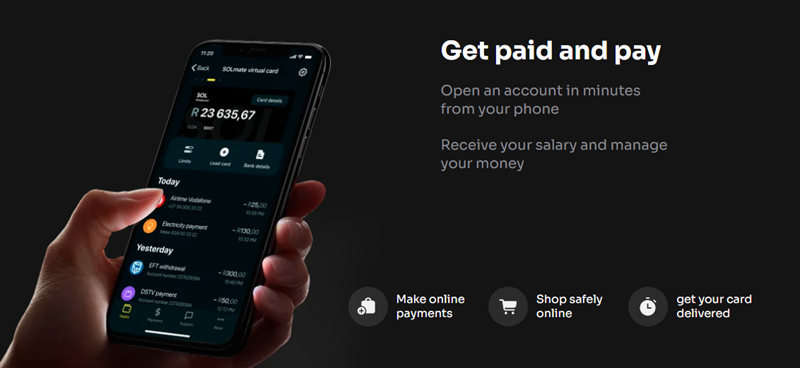
Digital wallets are changing that. With just a smartphone and mobile data, users can register, load funds, send or receive money, pay bills, shop online, and access value-added services, without the red tape. They offer many of the same functions as a bank account but with far fewer hurdles.
“The financial world has shifted,” says Holden. “A smartphone is now your ATM, your bank card, your till point, and your money manager all in one. For many users, it’s the only financial tool they’ve ever needed.”
A Platform for Empowerment
Digital wallets are deeply integrated into everyday life. From spaza shop owners accepting payments, to parents sending lunch money, to side hustlers receiving instant payment, wallets are powering participation in the economy.
Security advantages are also key. Digital wallets use biometric verification, tokenised transactions, and real-time alerts, offering greater peace of mind than cash or some cards.
Globally, digital wallets are now the dominant payment method for online shopping, accounting for nearly half of all e-commerce transactions. McKinsey & Company’s 2024 State of Consumer Digital Payments report highlights that digital wallets are the fastest-growing online payment option worldwide, reflecting consumers’ preference for speed, convenience, and security.
“For many customers, especially youth and informal entrepreneurs, standing in a bank queue and paying fees feels outdated,” says Holden. “They’re not anti-bank, they are choosing what’s faster, smarter, and tailored to their lives.”
Why This Matters for Financial Visibility
A common misconception is that without a bank account, you aren’t financially visible. That’s no longer true. Digital wallets create records of income and spending, enable recurring payments, and can support microloans and account upgrades. The digital trail is proof of activity.
Many South Africans earn informally, and digital wallets give them a real chance to build a financial footprint outside legacy institutions.
The Future Is Already Here
Bank accounts will always have their place, especially for savings and credit. But when it comes to daily financial life, the writing is on the wall: digital wallets are winning.
SOLmate is committed to enabling this future. “We focus on making digital financial services accessible, intuitive, and empowering for everyone, from students and social grant recipients to small business owners and gig workers,” Holden concludes. “People don’t need a bank account to take control of their finances; they need access. Digital wallets are delivering that, right in the palm of their hands.”
Article Provided